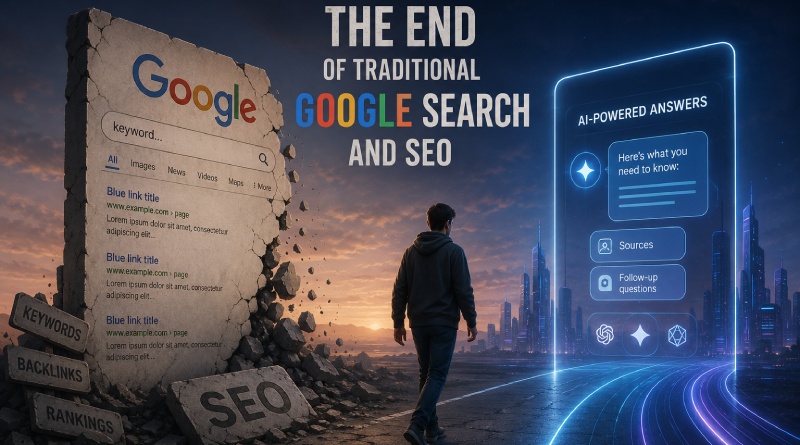
The end of traditional Google search and SEO.
A few days ago at the I/O 2026 conference, Google dropped some stunning news. In short, the search we’re used to will be completely transformed, and Google now wants to build its entire search infrastructure around its Gemini language model. Already, website traffic has dropped significantly because people can get answers to their questions without even scrolling down to the first few search results. Google’s assistant will answer them, and it’s worth noting that this model is getting smarter and often gathers truly relevant information for us.
This is the biggest change in the last 25 years, and it could truly turn the entire industry upside down.
The main problem here lies in traffic, especially for website owners. You’ve created a useful and interesting resource, but now there’s no point for a user to visit your site – artificial intelligence will tell them everything anyway, and all your work, costs, and ad revenue go down the drain. It might be an overstatement to say this is the end of an entire industry – no. Websites will certainly remain and continue to evolve.
What about Google? How will the number of advertisers on Google Ads change?
Why should I pay for ads that don’t generate revenue? Sure, people will switch to cost-per-action (CPA), but how will that affect traffic volume and pricing? The question remains open. There’s a view that Google is undermining its own business model. Where will revenue come from now? Maybe by charging to have your brand mentioned more often in AI search results? But according to various sources, these links to your site in AI responses generate just a fraction of traffic – a few percentage points. That’s not something an advertiser would want to pay for.
In short, there are more questions than answers. It’s certainly very convenient for users, but it carries significant risks for publishers and website owners, not to mention small businesses.